Understanding Evidence in a Louisiana Premises Liability Claim
When someone is injured on another person’s property, questions quickly arise about what happened and who bears responsibility. Louisiana law allows injured individuals to pursue compensation when unsafe conditions on a property cause harm. However, success in these matters often depends on one key element: evidence.
Evidence in a Louisiana premises liability claim plays a central role in establishing what occurred, why it occurred, and whether the property owner failed to maintain reasonably safe conditions. Without clear documentation and supporting facts, it becomes much harder to show how a hazardous condition caused an injury.
Understanding what types of evidence matter and how they are gathered can help injured individuals protect their rights and strengthen their claims.
What Premises Liability Means in Louisiana
Premises liability refers to situations where someone suffers harm because of a dangerous condition on another person’s property. Louisiana property owners have a responsibility to maintain their premises in a reasonably safe condition for visitors.
These situations can arise in many environments, including:
Grocery stores
Apartment buildings
Restaurants and bars
Parking lots
Office buildings
Hotels and resorts
Private homes
Common incidents associated with premises liability claims include:
Slip and fall accidents
Trip hazards caused by uneven surfaces
Poor lighting in walkways or stairwells
Falling merchandise in retail stores
Structural hazards such as broken railings
Wet or slippery floors
When an injury occurs, evidence becomes the foundation for determining whether the property owner failed to address a hazardous condition that should have been corrected.
Why Evidence Matters in Premises Liability Cases
Evidence provides the factual basis needed to explain what happened. In premises liability claims, documentation helps demonstrate several important elements.
First, it helps show that a hazardous condition existed on the property. Second, it may establish that the property owner knew or should have known about the dangerous condition. Finally, it connects the unsafe condition to the injury that occurred.
Without sufficient evidence, it becomes difficult to prove that a property owner failed to maintain safe conditions or failed to correct a known hazard.
Because many dangerous conditions can change quickly or be repaired soon after an incident, collecting evidence early is often critical.
Types of Evidence Used in Premises Liability Claims
Many different forms of documentation can help support a premises liability claim in Louisiana. Each type of evidence provides a different perspective on what happened.
Photographs and Video Evidence
Visual documentation often becomes some of the most powerful evidence in these situations. Photos and videos can capture the exact conditions present at the time of the incident.
Examples include:
Wet floors without warning signs
Broken steps or uneven pavement
Damaged handrails
Spilled substances in aisles
Poor lighting conditions
If security cameras are present, surveillance footage may also show how the incident occurred or how long a dangerous condition existed before the accident.
Because property conditions can change quickly, photographs taken soon after the incident may become especially valuable.
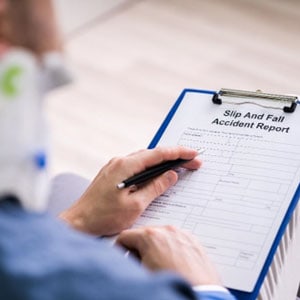
Incident Reports
Many businesses create incident reports when an accident occurs on their property. These reports typically include information about:
The date and time of the incident
The location on the property
Descriptions of the event
Names of employees present
While incident reports alone do not determine responsibility, they can provide helpful documentation showing that an accident occurred and was reported to the property owner or staff.
Witness Statements
People who saw the incident can provide important information about how the accident happened.
Witnesses may confirm details such as:
Whether a dangerous condition was visible
Whether warning signs were present
Whether employees were aware of the hazard
In some cases, witnesses may have noticed the dangerous condition before the incident occurred. Their observations may help establish how long the hazard existed.
Because memories fade over time, obtaining witness information soon after an incident can be helpful.
Maintenance and Inspection Records
Property owners often maintain records related to inspections, maintenance schedules, and repairs. These records may show whether the property owner regularly inspected the premises for hazards.
For example, inspection logs may indicate:
How frequently staff check for hazards
When the last inspection occurred
Whether a hazardous condition was reported before the accident
Maintenance records can sometimes reveal whether a known issue was addressed or left unresolved.
Medical Records
Medical documentation plays an important role in connecting an injury to the accident that occurred on the property.
Medical records may include:
Emergency room evaluations
Physician notes
Diagnostic imaging results
Treatment plans
Physical therapy documentation
These records help establish the nature and severity of the injury and show how it relates to the incident.
Clear medical documentation often becomes a key component of any injury claim.
Expert Analysis
In some cases, professionals with specialized knowledge may review evidence to provide technical insight. These professionals might analyze factors such as building safety standards, lighting conditions, or structural design.
Their evaluations can help explain how a dangerous condition may have contributed to an accident.
Expert analysis may also help interpret maintenance records or inspection procedures to determine whether property safety standards were followed.
How Evidence Establishes Property Owner Responsibility
In Louisiana premises liability cases, evidence often focuses on whether the property owner knew or should have known about a dangerous condition.
Evidence may demonstrate responsibility in several ways.
One approach involves showing that the property owner created the hazardous condition. For example, if employees spilled a liquid on the floor and failed to clean it, this may indicate direct responsibility.
Another situation involves showing that the property owner knew about the dangerous condition but did not correct it in a reasonable time.
Evidence may also show that the hazard existed long enough that the property owner should have discovered it through routine inspections.
These questions often become central to determining responsibility.
The Importance of Preserving Evidence
Because many hazards are temporary, evidence can disappear quickly after an accident.
Spills are cleaned. Broken surfaces are repaired. Lighting may be replaced. Surveillance footage may be overwritten after a short period.
For this reason, preserving evidence as early as possible can be important. Prompt documentation may help capture conditions exactly as they existed when the injury occurred.
Witness contact information, photographs, and incident reports collected early can help prevent critical information from being lost.
Common Challenges in Gathering Evidence
Premises liability claims sometimes involve obstacles when gathering evidence. Property owners may control access to surveillance footage, maintenance records, or internal reports.
Additionally, dangerous conditions may change quickly after an accident occurs. A spill may be cleaned within minutes, or a damaged step may be repaired before photographs are taken.
Witnesses may also leave the scene before their contact information is obtained.
Because of these challenges, collecting information quickly can often make a significant difference in the strength of a claim.
Examples of Evidence in Different Types of Premises Liability Cases
Different types of accidents may rely on different forms of documentation.
Slip and Fall Incidents
In slip and fall situations, evidence often focuses on the condition of the floor surface. Photographs of liquids, debris, or slippery substances may help explain how the accident occurred.
Security footage may show whether the spill was present long enough that employees should have addressed it.
Maintenance logs may also indicate whether staff performed regular inspections.
Poor Lighting Conditions
If inadequate lighting contributed to an accident, evidence may include photographs showing dark stairways, parking lots, or hallways.
Maintenance records may show whether lighting fixtures were reported as malfunctioning before the incident.
Witness statements may also describe visibility conditions at the time of the accident.
Structural Hazards
Structural hazards such as broken railings, uneven steps, or damaged flooring can create serious risks.
Evidence in these situations often includes photographs documenting the physical condition of the structure. Inspection records and repair history may reveal whether the issue had been reported previously.
Expert analysis may also help explain how the structural defect created a dangerous condition.
How Louisiana Law Views Hazardous Property Conditions
Louisiana courts generally consider whether a property owner exercised reasonable care in maintaining their premises.
Evidence helps answer several important questions:
Did a dangerous condition exist on the property?
Did the property owner know about the condition?
Should the property owner have discovered the hazard through routine inspection?
Did the dangerous condition directly cause the injury?
Each of these questions relies heavily on factual documentation.
The stronger the evidence, the clearer the picture becomes regarding what occurred and why.
The Role of Timelines in Premises Liability Evidence
In many cases, the timeline surrounding a hazardous condition becomes a key issue.
Evidence may help determine how long the dangerous condition existed before the accident occurred.
For example, surveillance footage may show a spill remaining on the floor for an extended period. Inspection logs may indicate that employees had not checked the area recently.
These details can help clarify whether the property owner had sufficient opportunity to address the hazard.
Establishing this timeline often becomes central to evaluating responsibility.
Why Early Documentation Matters After an Accident
Individuals injured on someone else’s property may feel overwhelmed immediately after the incident. However, early documentation can play an important role in preserving evidence.
Taking photographs, noting the location of the incident, and gathering witness information can help preserve important details.
Medical evaluations should also be obtained as soon as possible. Medical records help establish a clear link between the accident and the injury.
Even small details documented early may become valuable later.
The Role Evidence Plays in Premises Liability Claims
Evidence forms the backbone of any Louisiana premises liability claim. From photographs and surveillance footage to witness statements and medical documentation, each piece of information helps reconstruct the events that led to an injury.
Because property conditions can change quickly, preserving evidence early often becomes critical. Documentation not only clarifies what happened but also helps determine whether a property owner failed to maintain reasonably safe conditions.
Understanding the types of evidence used in these claims can help injured individuals recognize the importance of documenting hazardous conditions and seeking proper medical evaluation after an incident.
